
April 29, 2026 · Mark Rose · 5 min read
Hawaii, or: How I Failed to Unplug
I went to Hawaii to unplug. Instead, work found me on the pool deck — and the trip turned into a running list of what bad systems, capture, and cheap tradeoffs actually cost when time is scarce.
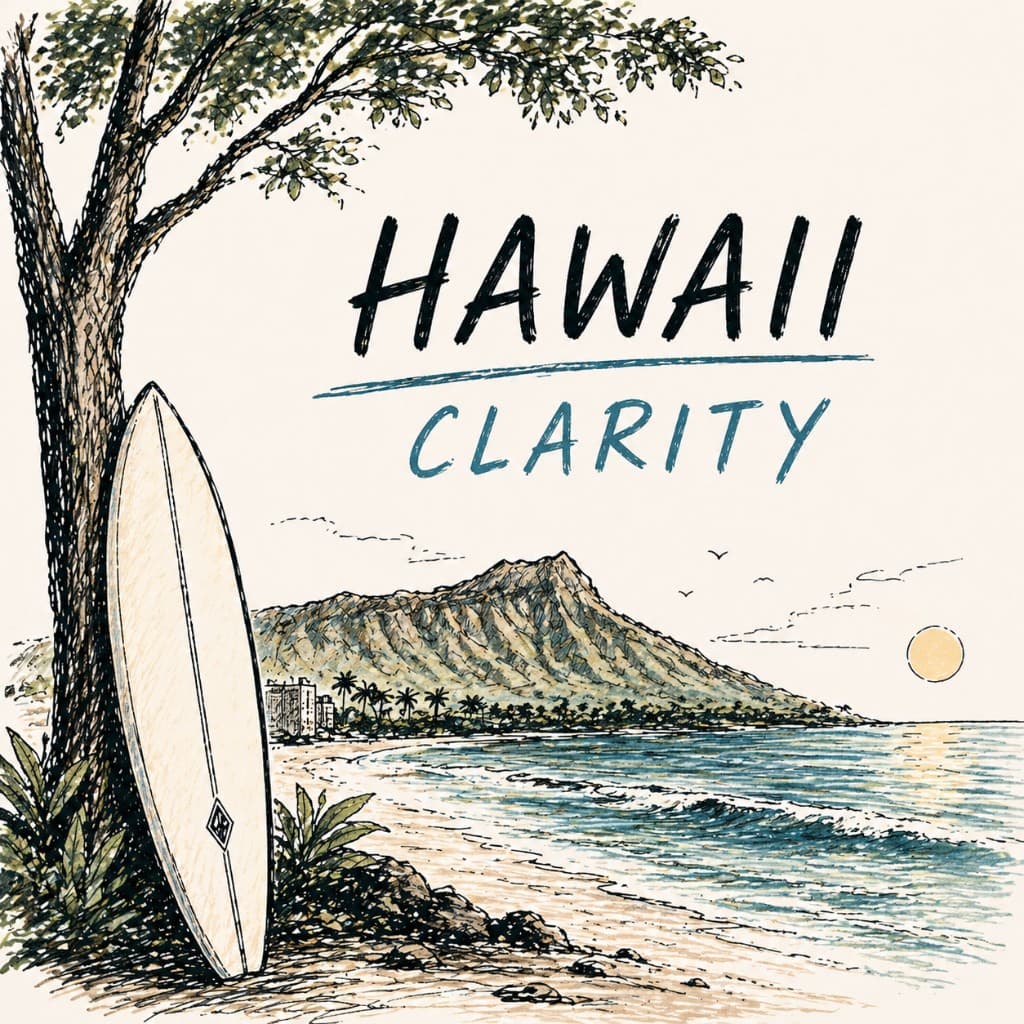
I went to Hawaii to unplug.
Instead, work found me.
Between 6am and 10am one morning, I had an Airbnb issue, a real estate decision, and a call drop onto my calendar. Two hours later I was sitting on a pool deck with my laptop open, feeling slightly ridiculous.
That was the first realization of the trip — and the first thing I wrote down all week:
"You don't unplug. Work finds you."
If you're reachable, you're working.
Bad systems follow you on vacation.
The honest truth is I'd built a life that required me to be present. Not in the spiritual sense — in the operational sense. There were too many decisions only I could make. Too many threads only I could hold. The pool deck wasn't an exception. It was inevitable.
A few days in, something shifted
I slowed down. I surfed. I stopped trying to plan every hour. I started letting the day come to me instead of pushing it forward.
And something interesting happened: ideas started showing up. Then, just as quickly, they disappeared.
I'd be paddling out and a thought would drop in fully formed. Then a wave would come and it would vanish. By the time I got back to my notebook, all I had left was the shape of the thing.
Rest creates ideas. Capture preserves them.
Clarity comes from subtraction.
Exploration creates better days than optimization.
I started carrying a small notebook everywhere. Not because the ideas were precious — but because I'd finally stopped generating enough mental noise to drown them out. The signal was louder. I just needed somewhere to put it.
People
The other thing I noticed was people.
There was a guy in the water one morning — clearly an expert, the kind who'd been surfing the same break for twenty years. The current was pulling me wrong. He didn't have to say anything. He paddled over, pointed where I needed to be, and went back to his wave.
On a boat tour later in the week, the guides weren't going through motions. They loved what they were doing. You could see it in the way they pointed at things they'd already pointed at a thousand times.
Confidence makes room for others.
People who love their work are easy to spot.
Joy shows up as presence, not performance.
You can fake competence. You can't fake presence. The people I remember from this trip weren't the most polished — they were the most awake.
Small tradeoffs
Then there were the small tradeoffs. The kind I always get wrong.
I chose the cheaper parking. It saved me maybe ten dollars a day. It also added a ten-minute walk, two crosswalks, and a small mental tax every time I considered going somewhere. By day three I wasn't going places because the parking math had quietly become a friction point.
Cheap decisions create expensive friction.
Optimize for time when time is scarce.
Saving money can cost the experience.
This isn't a Hawaii thing. This is a me thing. I default to the option that looks cheaper on the surface and pay for it everywhere else. The lesson keeps repeating. Maybe this time I'll listen.
Play vs. optimization
By the last day, I stopped optimizing entirely.
I didn't make a plan. I went out for a paddle. The paddle turned into stand-up paddle boarding. The SUP turned into body surfing. The body surfing turned into swimming with turtles. The turtles turned into dinner with people I hadn't planned to have dinner with.
It was the best day of the trip. I didn't engineer a single minute of it.
Play unlocks what planning can't.
The best days aren't tightly scheduled.
I think this is the part that's hardest for product people. We optimize for outcomes. We A/B test our weekends. We set goals for our vacations. And then we wonder why the trip feels like a sprint.
Play is the opposite of optimization. Play is what happens when you stop measuring.
One more thing
If I had to leave you with one Mark-ism from the week, it would be this:
You're only on vacation when your systems are too.
The work isn't to unplug harder. The work is to build a life that doesn't require me to be plugged in. That's a system problem, not a willpower problem.
And it's the project I'm coming home to.
Share this article
Loading discussion...
Comments
No comments yet. Start the discussion.